
Community
Columbus firefighter raises money for fallen North Royalton firefighter Ryan Milligan's family as investigation continues
By Michelle Rivera
Advertisement · Why this ad?
Michelle, an Ohio State University graduate, has spent over six years focusing on community issues in Cleveland, including social justice and local initiatives. She has previously written for NPR's local affiliates, where she honed her storytelling skills to highlight diverse community voices.
More from Michelle →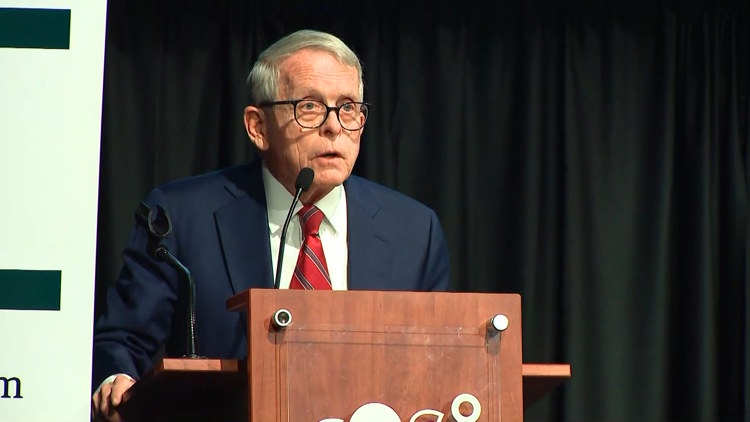
As the winter chill settles over Cleveland, a quiet but significant transition is underway that promises to shape Ohio’s public health landscape in the coming years. On a brisk Wednesday evening, outgoing Governor Mike DeWine and his wife shared a moment of reflection and hope with Amy Acton, the incoming governor’s appointee and a familiar face to many in the Buckeye State. Their meeting, though private, signals a smooth handover of leadership and a commitment to continuity in health policy at a critical juncture.
Governor DeWine, who has steered Ohio through the tumultuous waters of the COVID-19 pandemic, confirmed that he met with Amy Acton, his former health director and a trusted figure in Ohio’s public health arena. The meeting took place Wednesday evening, just days before Acton officially takes office on January 11. While details remain private, DeWine expressed confidence in Acton’s ability to lead Ohio’s health initiatives, emphasizing her dedication and expertise.
“Amy has been an integral part of our efforts to keep Ohioans safe,” DeWine said in a brief statement. “I believe she will continue to serve the state with integrity and compassion.” The transition comes at a pivotal time, as Ohio faces ongoing challenges related to healthcare access, vaccine distribution, and public health education amid evolving pandemic dynamics.
In Cleveland and across Ohio, residents are watching this transition with cautious optimism. Amy Acton’s tenure as health director during the pandemic was marked by both praise for her transparency and criticism from those wary of government mandates. Her return to the helm of Ohio’s health policy has sparked conversations about how her leadership might influence local efforts to combat health disparities and improve access to care.
Community leaders in Cleveland see Acton’s appointment as an opportunity to strengthen public health infrastructure. “Her experience during the pandemic showed her dedication to Ohioans’ well-being,” said Reverend Samuel Carter, a local faith leader. “We hope she’ll continue to prioritize families, faith communities, and the most vulnerable among us.” Many residents believe that stable, committed leadership rooted in faith and community values can help rebuild trust in public health initiatives.
As Amy Acton prepares to assume her new role, the focus shifts to the policies she will champion in the coming months. Her leadership will be instrumental in shaping Ohio’s response to ongoing health challenges, including mental health crises and healthcare inequities. The transition also signals a broader commitment to community-centered approaches that emphasize faith, family, and resilience.
Governor DeWine’s departure marks the end of a chapter defined by decisive action during a global crisis. His support for Acton’s leadership underscores a shared belief in the importance of experienced, compassionate governance. For Cleveland families and communities across Ohio, this transition offers hope that the values of faith, stability, and dedicated service will continue to guide their state’s future.
To understand the full impact of this transition, it’s crucial to consider the historical context of public health in Ohio, especially in Cleveland. The city, long a hub for industry and innovation, has faced its own public health struggles, from lead poisoning in older housing to disparities in healthcare access among its diverse neighborhoods. These issues have often been magnified during crises like the pandemic, exposing systemic inequities and highlighting the need for strong, community-focused leadership.
Amy Acton’s return to a prominent health leadership role resonates deeply within Cleveland’s neighborhoods, many of which have been disproportionately affected by health disparities. Her previous tenure demonstrated her ability to communicate transparently and act decisively—traits that local leaders hope will now translate into tangible improvements in health outcomes for vulnerable populations.
Mike DeWine, Ohio’s 70th governor, has been a steadying presence through turbulent times. His leadership during the pandemic was characterized by a pragmatic approach, balancing public health concerns with economic considerations. DeWine’s decision to meet with Acton privately underscores his respect for her expertise and his hope for a seamless transition.
Amy Acton, a trained physician and public health expert, became a household name during the pandemic. Her candid briefings and advocacy for science-based policies earned her both admiration and criticism. Her return signals a recognition that Ohio’s health system needs experienced leadership to navigate future challenges, including mental health, substance abuse, and health equity issues.
Looking ahead, Cleveland’s community organizations are preparing for the next chapter in public health. Local nonprofits, faith-based groups, and health clinics are eager to collaborate with the state to implement targeted initiatives that address longstanding disparities. These include expanding access to vaccinations, mental health services, and preventive care in underserved neighborhoods.
Furthermore, Cleveland’s health leaders are advocating for increased investment in local health infrastructure, including community health workers, mobile clinics, and culturally competent care programs. The hope is that with strong leadership at the state level, these grassroots efforts will receive the support needed to make a lasting difference.
As Amy Acton prepares to officially take office, her administration is expected to prioritize public health infrastructure, health equity, and community engagement. The city of Cleveland, with its rich history of resilience and activism, is poised to play a vital role in shaping these initiatives. Local officials are already in discussions about expanding partnerships with hospitals like Cleveland Clinic and University Hospitals to develop innovative health programs tailored to community needs.
In the coming months, residents can expect to see increased outreach efforts, community forums, and policy initiatives aimed at reducing health disparities. The city’s leadership remains optimistic that this new chapter will foster a more equitable, accessible, and resilient health system for all Clevelanders.
This transition in Ohio’s public health leadership, marked by the private meeting between DeWine and Acton, signals a renewed focus on community-centered health strategies. For Cleveland, a city that has weathered economic and health crises alike, the coming months will be crucial in translating leadership changes into tangible improvements on the ground. With experienced, compassionate leadership guiding the way, Ohio’s communities can look forward to a healthier, more equitable future.
By Michelle Rivera

By Michelle Rivera
By Michelle Rivera
By Michelle Rivera